
Forearm Pain After Pull-Ups: Causes and How to Fix It
By the Rekup team · Published October 28, 2026 · 8 min read
Forearm pain after pull-ups is usually one of two things: grip fatigue in the muscles of the forearm, which fades in two or three days, or an irritated tendon where those muscles attach at the elbow, from adding hanging and pulling volume too quickly. Location tells them apart: a diffuse ache in the forearm is fatigue, pain on a bony point at the inside or outside of the elbow is a tendon asking for less load.
Where does it hurt? What each spot usually means
Every pull-up starts with your hands. The muscles that close your fingers and hold the bar run along the palm side of the forearm and attach on the inner bump of the elbow; the muscles on the back of the forearm work at the same time to keep the wrist stable while you grip. This table is a guide to what is likely, not a diagnosis:
| Where you feel it | What it often is | Typical signs | What to do |
|---|---|---|---|
| Belly of both forearms, palm side, during and after | Grip fatigue, then muscle soreness | Pump and burning during sets, dull ache the next day, symmetrical | Normal; it fades in 2 to 3 days |
| Bony bump on the inside of the elbow | Irritated flexor tendon (often called golfer's elbow) | Hurts when gripping, curling the wrist, or at the start of a pull-up | Cut grip volume, modify pulling (below) |
| Bony bump on the outside of the elbow | Irritated extensor tendon (lateral elbow tendinopathy) | Hurts when gripping with the palm down, shaking hands, lifting a kettle | Same approach; avoid palm-down holds for a while |
| Top of the forearm, thumb side, near the elbow | Overworked brachioradialis, the muscle that helps bend the elbow | Ache after many palm-down pull-ups or rows | Change grip, reduce volume |
| Tingling in the ring and little fingers | Irritated ulnar nerve at the elbow | Pins and needles, worse with the elbow bent | See a doctor if it does not settle quickly |
| Both arms swollen, very painful, dark urine | Rhabdomyolysis | After an unusually high-volume session | Emergency: get medical help now |
The inner elbow is the classic trouble spot for pullers. The flexor and pronator muscles of the forearm share a common tendon on the inner bump of the elbow, and repeated gripping and wrist loading can irritate it (Amin et al., 2015). The outer elbow is less specific to pull-ups, but a review of lateral elbow tendinopathy describes the same pattern: pain at the outer bump provoked by gripping, in people whose load has outrun what the tendon can handle (Coombes et al., 2015).
What to do in the first days
If it is fatigue, your forearms will feel clearly better within two or three days. If a tendon is irritated, the elbow will stay tender on that bony point, but should improve week to week once the load is right. The NHS advises seeing a GP if elbow pain continues after at least two weeks of rest and self-care.
Why pull-ups load your forearms so much
Your grip holds your full body weight on every rep, and in CrossFit it often does so for minutes at a time. The tendon at the elbow does not mind hard work; it minds work that rises faster than it can adapt. In practice, it is usually one of these:
- A volume spike. A Murph, a gymnastics-heavy week, a new pull-up program, or a session where you chased kipping reps. Each workout seems fine; the week adds up.
- Grip work hidden in other movements. Toes-to-bar, rope climbs, farmers carries, heavy deadlifts and rows all load the same flexors as pull-ups.
- Holding on harder than you need to. A crushing grip on every rep, often with a thick bar, towels or a fatigued kip, keeps the forearm under tension for longer.
- A new grip. Switching to rings, false grip for muscle-ups or long sets of palm-down pull-ups loads the forearm in a way it is not used to.
- Weak forearms for your pulling strength. Your back and biceps may be ready for more reps before your grip and elbow tendons are.
How to keep pulling while it settles
Most people do not need to stop pulling. They need a version that trains the back without irritating the elbow. Try these in order and keep the first one that stays pain-free:
- Neutral grip. Palms facing each other, on parallel handles or rings. Many people with an irritated elbow tolerate it much better than a palm-down grip.
- Ring rows or inverted rows. Your feet take part of the weight, so the grip works less on every rep.
- Straps on rows, deadlifts and pulldowns. Straps let the back keep training while the forearm rests.
- Fewer reps, more sets. Short sets well short of failure, rather than long kipping sets or max-rep tests.
- Strict before kipping. Kipping and butterfly pull-ups add speed and a hard catch at the bottom; leave them out until strict reps are comfortable.
Use the same pain rule as for any tendon: up to 3 out of 10 during the exercise is acceptable if it settles within 24 hours and does not build from session to session. Forearms and biceps usually recover from normal soreness within 24 to 48 hours; our guide on recovery time by muscle group compares them with the rest of the body.
A three-week plan to get your grip back
This is a practical progression for simple overload, not a rehabilitation program for a diagnosed injury.
- Week 1: calm it down, keep strength. Ring rows or neutral-grip pulls, 3 sets of 8, well short of failure. Wrist curls and reverse wrist curls with a light dumbbell, 3 sets of 15, lowering over three seconds, every other day. No hangs, toes-to-bar or rope climbs.
- Week 2: add hanging back. Strict neutral-grip pull-ups, 4 sets of 3 to 5. Short dead hangs of 10 to 20 seconds. Keep the wrist work and the straps on heavy pulls.
- Week 3: back to your normal grip. Return to palm-down pull-ups at about half your usual volume, then add volume each session while pain stays within the rule above. Add toes-to-bar and rope climbs last.
How strong is the evidence? For the outer elbow, a systematic review found that eccentric wrist exercise may reduce pain and improve function, but from a small number of studies of limited quality (Cullinane et al., 2014). Evidence for the inner elbow is thinner still, and reviews recommend the same conservative approach: reduce the provoking load, then strengthen progressively (Amin et al., 2015). Gradual loading remains the usual first step because it is low-risk and keeps you training; a physiotherapist can adapt it if your elbow is not responding.
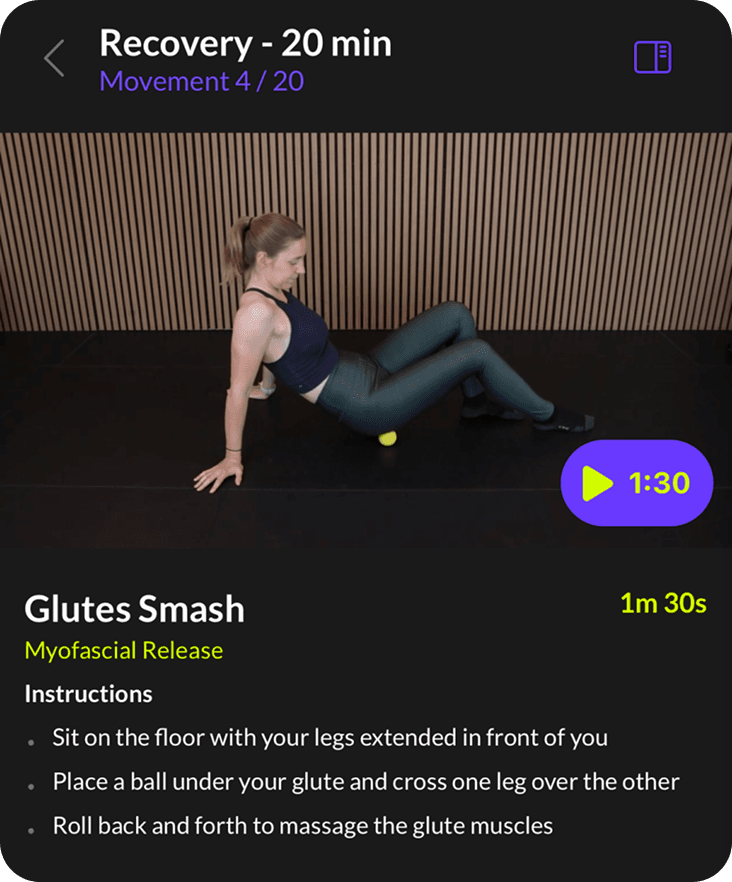
What about massage? Rolling the forearm with a lacrosse ball before and after training can make it feel looser and less sore. A meta-analysis of foam rolling found small, mostly short-term effects, the most consistent being a small reduction in perceived muscle pain (Wiewelhove et al., 2019). Use it for comfort, not as a fix for an irritated tendon.
Preventing forearm pain from pull-ups
- Raise pull-up and hanging volume gradually, especially before a benchmark like Murph.
- Count all your grip work over the week: pull-ups, toes-to-bar, rope climbs, deadlifts, carries and rows.
- Rotate grips: palm-down, neutral and rings across the week.
- Train the forearm directly twice a week: wrist curls, reverse wrist curls and timed hangs.
- Grip the bar firmly, not as hard as possible, and use straps on heavy accessory pulls.
- Keep strict pull-ups in your program so kipping volume never outpaces your strength.
If the pain is on the shoulder side of your pressing, read shoulder pain after bench press. For the full CrossFit week, how to recover from CrossFit shows how to spread gymnastics and lifting so no muscle group gets hit every day.
In short
A diffuse ache in both forearms after pull-ups is grip fatigue and fades in two or three days. Pain on the bony point at the inside or outside of the elbow is an irritated tendon: cut grip volume, switch to neutral grip and rows, strengthen the forearm, and return to your usual pull-ups over two to three weeks. Then fix the cause, usually a sudden rise in pulling and hanging across the week. For next-day soreness elsewhere, see how to get rid of DOMS, and for the bigger picture, how to recover faster between workouts.
Frequently asked questions
+Is it normal for your forearms to hurt after pull-ups?
A tight, tired ache in the belly of both forearms after a session with lots of hanging and pulling is normal, especially if you are new to pull-ups or did more than usual. It should fade within two or three days. Pain that sits on a bony point at the elbow, or that is worse on one side, is not simple fatigue.
+Why does the inside of my elbow hurt after pull-ups?
The muscles that close your hand and curl your wrist attach on the bony bump on the inside of the elbow. When grip volume rises quickly, that attachment can become irritated, a problem often called golfer's elbow. It usually responds to reducing grip load and gradually strengthening the forearm.
+Should I stop doing pull-ups if my forearm hurts?
Stop the variation and the volume that hurt, not all pulling. Most people can keep training with a neutral grip, fewer hanging reps, and straps on rows and deadlifts while the forearm settles, then build back over two to three weeks.
+How long does forearm pain from pull-ups last?
Grip fatigue fades in two or three days. An irritated tendon at the elbow often improves over a few weeks of modified training, but can take longer; the NHS advises seeing a GP if elbow pain continues after at least two weeks of rest and self-care.
+Can pull-ups cause rhabdomyolysis?
Rarely, very high volumes of pulling, especially in unaccustomed people, can break down muscle enough to cause rhabdomyolysis. Severe, swollen, unusually painful arms with dark urine after a hard session are a medical emergency, not soreness.
Get this routine built from your own training
Log your workouts and Rekup estimates the load on each muscle group, shows when each one is ready again, and builds a recovery routine for the muscles you actually trained, from more than 130 movements.
Try Rekup PRO free for 14 daysFree plan available. Cancel the trial anytime from the store.


This guide is educational and does not replace a diagnosis. If pain is severe, keeps getting worse or comes with the warning signs listed above, see a doctor or a physiotherapist.
Sources
- Amin NH, Kumar NS, Schickendantz MS. Medial epicondylitis: evaluation and management. Journal of the American Academy of Orthopaedic Surgeons, 2015.
- Coombes BK, Bisset L, Vicenzino B. Management of lateral elbow tendinopathy: one size does not fit all. Journal of Orthopaedic and Sports Physical Therapy, 2015.
- Cullinane FL, Boocock MG, Trevelyan FC. Is eccentric exercise an effective treatment for lateral epicondylitis? A systematic review. Clinical Rehabilitation, 2014.
- Hopkins BS et al. CrossFit and rhabdomyolysis: a case series of 11 patients presenting at a single academic institution. Journal of Science and Medicine in Sport, 2019.
- Kim J et al. Exercise-induced rhabdomyolysis mechanisms and prevention: a literature review. Journal of Sport and Health Science, 2016.
- Wiewelhove T et al. A meta-analysis of the effects of foam rolling on performance and recovery. Frontiers in Physiology, 2019.
- NHS. Tennis elbow.